
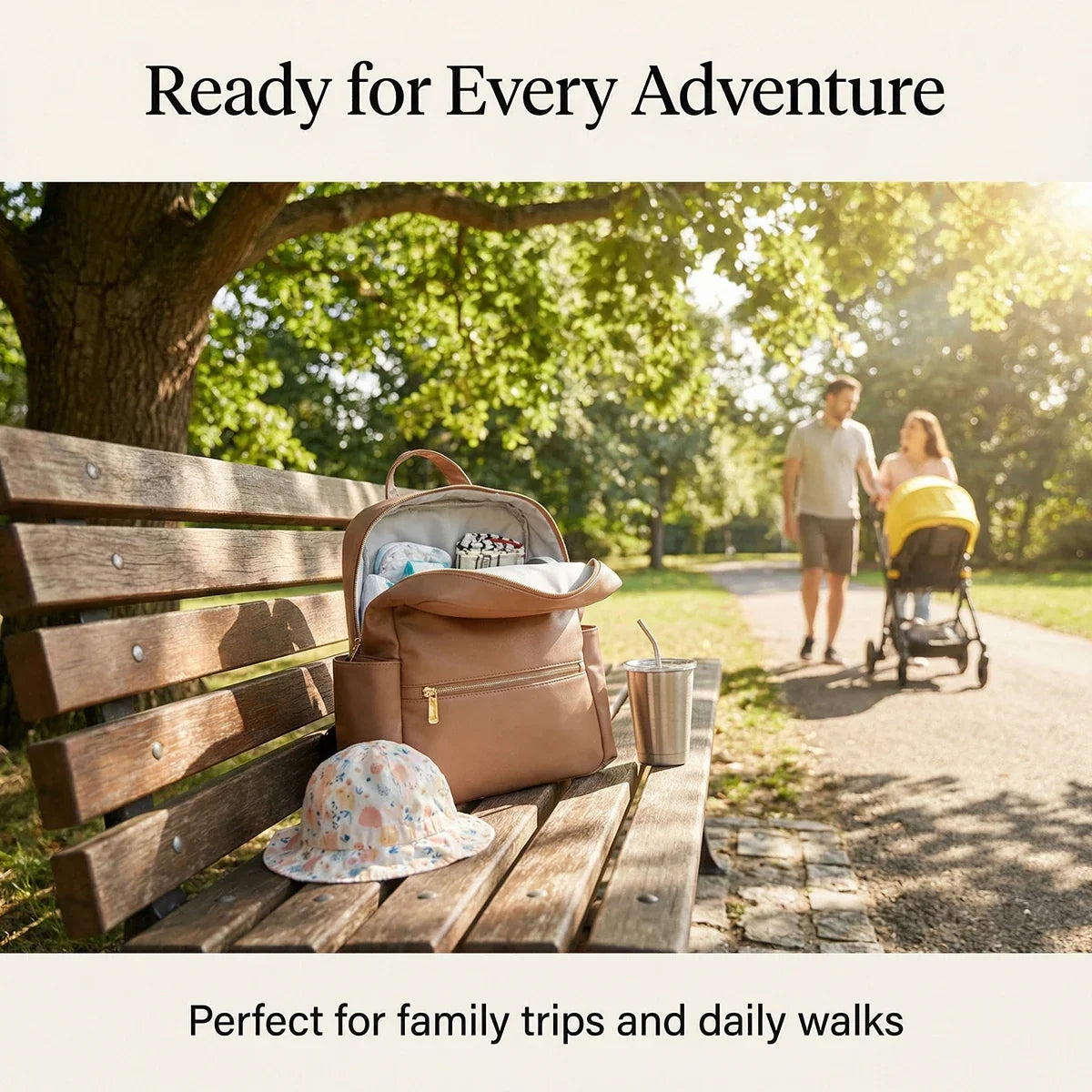
Choosing a baby changing bag can feel surprisingly difficult. There are backpacks, shoulder bags, changing sets and countless different features to compare. Some look stylish but lack useful storage, while others provide plenty of space but may be unnecessarily bulky for shorter outings.
If you are wondering how to choose a baby changing bag, focus on how it will fit into your own routine. The right bag should make leaving home feel easier, keep everyday essentials organised and remain comfortable when it is fully packed.
1. Choose a carrying style that suits your routine
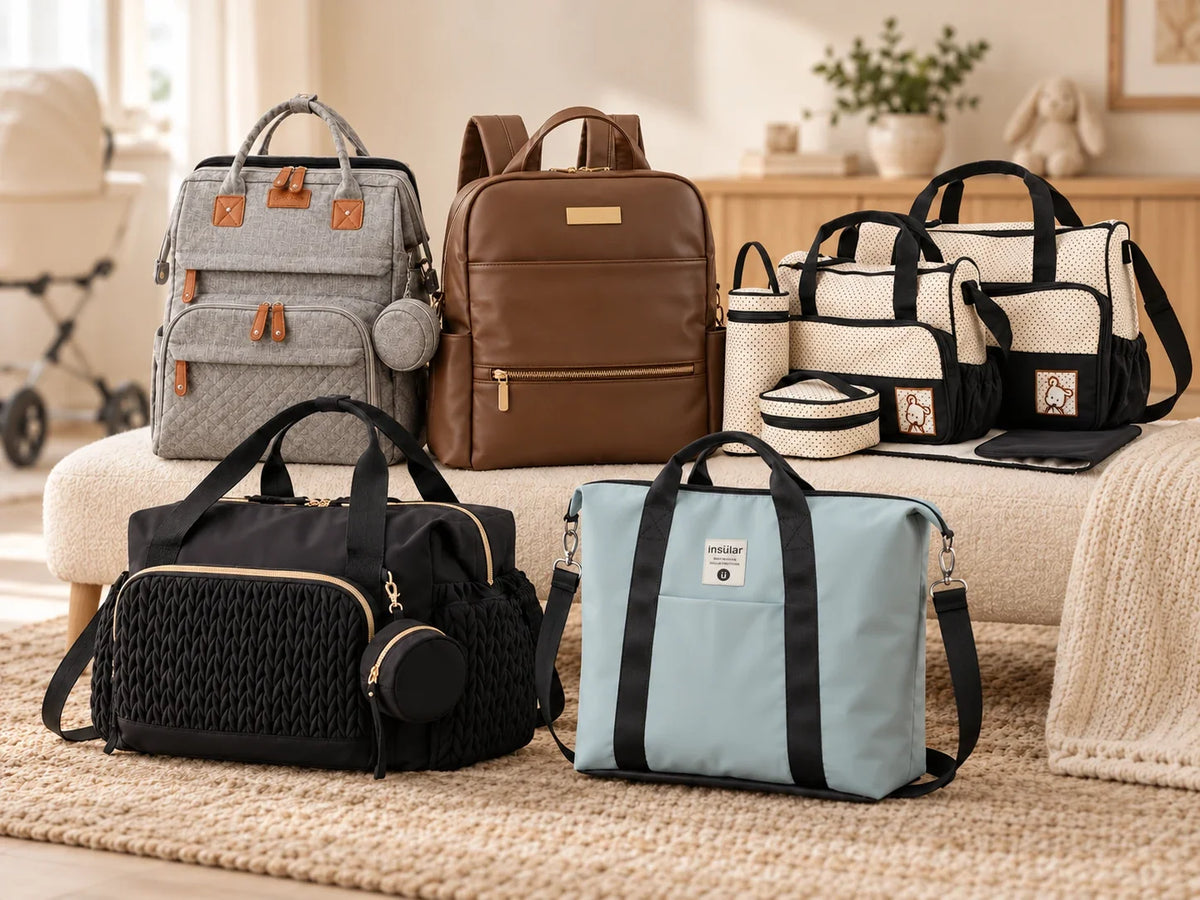
The first decision is whether you would prefer a backpack, shoulder bag or multi-piece changing set. Each style has its advantages.
Backpack changing bags
A backpack leaves both hands free, which can be particularly useful when pushing a buggy, carrying your baby or looking after an older child at the same time. Adjustable shoulder straps can also help distribute the weight more evenly than a bag carried on one shoulder.
A 3-in-1 nappy changing backpack may suit parents who want plenty of storage and a built-in fold-out changing area. This type of bag can be useful for longer outings or situations where suitable changing facilities might not be readily available.
Shoulder changing bags
Shoulder bags often have a wide opening, making it easy to see and reach the contents. They can work well for everyday trips when you want to access nappies, wipes or bottles quickly.
A quilted large-capacity baby changing bag offers the familiar shape of a holdall while providing dedicated storage for baby essentials. This style can also feel less like a traditional changing bag, making it useful beyond the baby stage.
Multi-piece changing sets
A changing bag set provides several coordinated bags and accessories for different kinds of outings. You might use the larger bag for a full day away from home and a smaller bag for a short walk or appointment.
A five-piece baby changing bag set can be a practical choice for parents who like to separate feeding, changing and personal items rather than carrying everything in one compartment.
2. Think about how much space you genuinely need
The biggest changing bag is not automatically the best one. A very large bag can become heavy and may encourage you to pack more than you actually need.
Before choosing a bag, lay out the items you normally expect to carry. These might include:
-
Nappies and wipes
-
Nappy cream
-
A portable changing mat
-
Spare clothes
-
Feeding essentials
-
Muslin cloths or bibs
-
Sealable bags for wet or soiled items
-
Your phone, keys and purse
Consider whether you normally take short trips or spend entire days away from home. Parents of twins or two young children may need more capacity, while a compact bag might be sufficient for shorter outings with one baby.
It is also worth checking the bag’s dimensions rather than judging its size from photographs alone.
3. Look for an opening and layout that make sense
A changing bag can hold plenty while still being awkward to use. Imagine needing to find wipes quickly while keeping one hand on your baby. A wide opening and a clear internal layout can make a noticeable difference.
Useful compartments might include separate spaces for:
-
Nappies and changing supplies
-
Bottles or snacks
-
Spare clothing
-
Wet or used items
-
Your phone and keys
-
Small items such as dummies or creams
Too many small pockets can become confusing, so look for a layout you will remember. The most frequently used items should be easy to reach without emptying the entire bag.
When your bag arrives, try packing it with your usual essentials. This is a simple way to find out whether its organisation works for you before taking it on a full day out.
4. Check how comfortable it is when fully packed
An empty bag may feel light and comfortable, but its weight changes considerably once it contains nappies, bottles, clothing and other essentials.
For a backpack, look for adjustable straps and padding around the shoulders and back. For a shoulder bag, consider whether the strap is wide enough to distribute weight comfortably and whether its length can be adjusted.
The weight of the empty bag matters too. A heavily structured bag may feel substantial before anything has been packed inside it.
Try the bag on at home when it is fully loaded. Adjust the straps and walk around for a few minutes. This will give you a more realistic idea of how it will feel during an outing.
5. Consider how the bag will work with your pushchair
If you regularly use a pushchair, think about where the changing bag will go. Some bags include dedicated buggy straps, while others may fit more naturally inside the pushchair basket.
Check that any supplied attachments are compatible with your pushchair and always follow the instructions provided by both manufacturers. Avoid overloading the pushchair handles, as excess weight could affect its balance and stability.
A hands-free backpack can be helpful when you need to fold the pushchair, use public transport or carry your baby. However, easy buggy attachment may be more convenient if you prefer not to carry the bag for long periods.
6. Choose materials that are easy to maintain
Changing bags are likely to encounter spills, crumbs, wet clothing and the occasional leaking bottle. An easy-to-clean material can save considerable time.
Look for:
-
A wipe-clean or water-resistant outer material
-
A lining that can be cleaned easily
-
Strong seams in high-use areas
-
Smooth, reliable zips
-
A base that can be wiped after being placed on the floor
Check the care instructions before cleaning the bag. Some materials can be washed, while others should only be wiped with a damp cloth. Empty the bag regularly and allow any damp compartments to dry completely before repacking them.
7. Decide which additional features you will actually use
Changing bags can include numerous extras, but not every feature will be useful to every family.
Common additions include:
-
Insulated bottle pockets
-
A portable changing mat
-
Buggy attachment straps
-
A separate bottle holder
-
A detachable pouch or soother case
-
A fold-out changing area
-
Easy-access wipes storage
Prioritise the features that solve a genuine problem for you. If you bottle-feed, insulated storage may be useful. If you frequently take short trips, a separate smaller pouch could help you avoid carrying the entire bag.
A portable changing mat is particularly useful when you are away from home. Before setting off, you can also use our guide to what to pack in a baby changing bag as a practical checklist.
8. Think beyond the baby stage
A well-chosen changing bag may remain useful long after nappies are no longer required. A neutral backpack or holdall can later be used for nursery, family days out, overnight stays or travel.
Consider whether the design feels versatile and whether removable accessories allow you to change how the bag is organised. A bag that adapts to different stages may offer better long-term value than one designed for a very narrow purpose.
Quick baby changing bag checklist
Before making your choice, ask yourself:
-
Is the bag large enough for my usual outings?
-
Will it still be comfortable when fully packed?
-
Can I reach essential items quickly?
-
Does the carrying style suit my routine?
-
Is the material easy to clean?
-
Will it work safely with my pushchair?
-
Are the included accessories genuinely useful to me?
-
Could I continue using it beyond the baby stage?
Frequently asked questions
Is a backpack or shoulder changing bag better?
Neither style is universally better. A backpack distributes weight across both shoulders and keeps your hands free. A shoulder bag can provide quicker access to its contents and may be easier to place beneath a pushchair. The best option depends on how you travel and which carrying style feels most comfortable.
How big should a baby changing bag be?
It should be large enough for your everyday essentials without becoming unnecessarily heavy. Think about the length of your usual outings, your baby’s feeding needs and whether you are packing for more than one child.
Can I use an ordinary backpack as a changing bag?
Yes, provided it is comfortable, durable and easy to organise. However, a purpose-designed changing backpack may offer helpful features such as insulated pockets, buggy straps, wipe-clean materials or an included changing mat.
Are insulated bottle pockets necessary?
They are not essential for everyone, but they can help keep bottles or snacks separate from the rest of the bag. Always follow appropriate food and milk storage guidance rather than relying on the pocket alone for long-term temperature control.
Should a changing bag include a changing mat?
An included mat is convenient, but you can also purchase one separately. Choose a portable mat that is easy to clean, folds compactly and provides a clean surface when suitable changing facilities are unavailable.
Choosing the right bag for your family
The right baby changing bag is the one that makes your own routine easier. Think about where you normally go, what you genuinely carry and how you prefer to travel.
Instead of choosing solely by appearance or capacity, compare comfort, accessibility, materials and the features you are most likely to use. You can explore F&M’s Changing & Travel collection to compare practical bags and changing essentials for family life on the go.

Leave a comment
This site is protected by hCaptcha and the hCaptcha Privacy Policy and Terms of Service apply.